Initiatrix

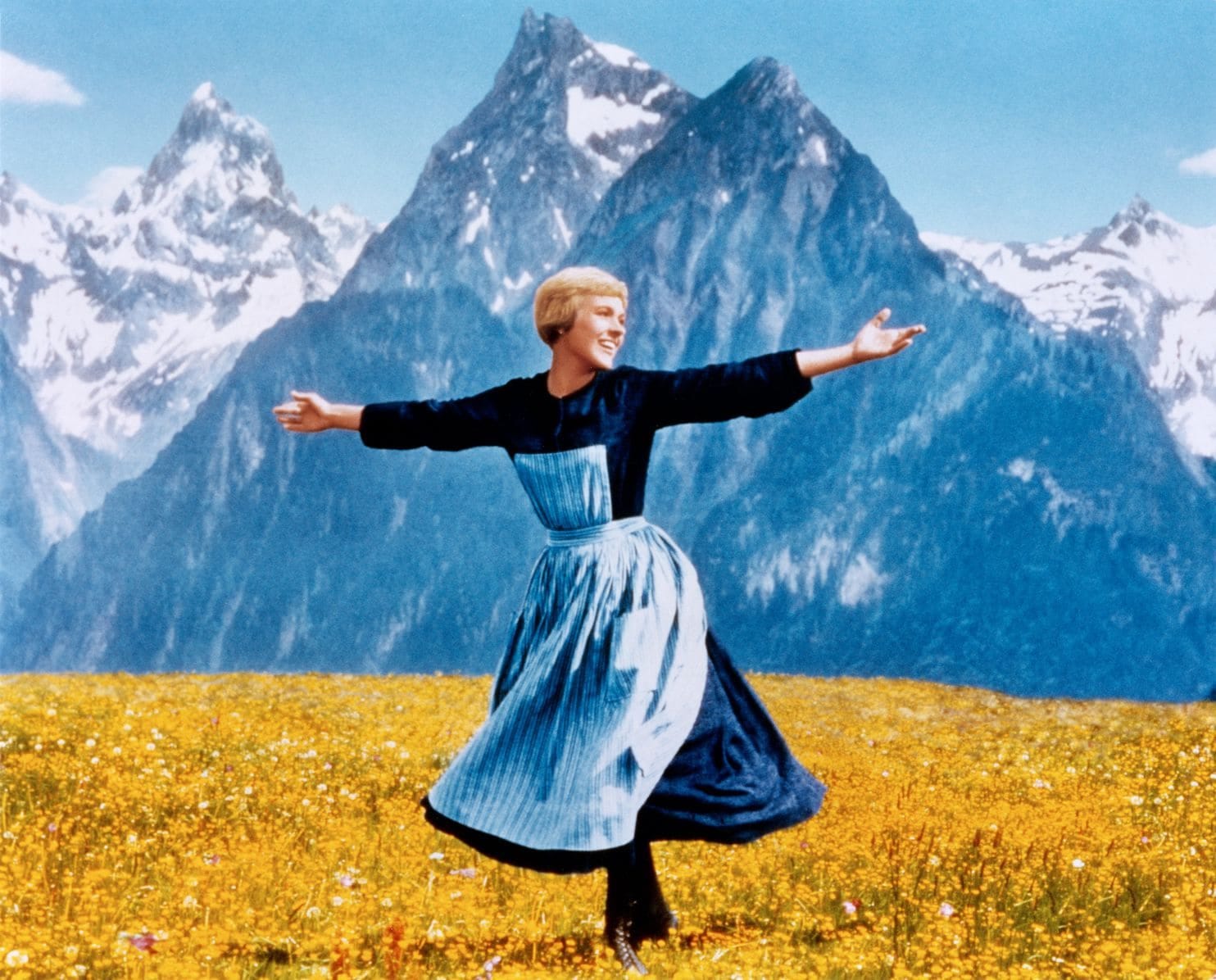
The seven-novel Mary Poppins series was written by Pamela Lyndon Travers (1899–1996). Travers was no whimsical fabulist; she was a lifelong Gurdjieffian, initiated into his teachings via A.R. Orage (editor of The New English Weekly, where she published from 1932) and Jane Heap. By the 1930s, in Paris, she met Gurdjieff himself, becoming a devoted pupil. She indexed the Gurdjieff Society’s library (spanning Sufism, Zen, Christianity, and Gnosticism), led study groups on Maurice Nicoll’s Living Time, and contributed to Parabola magazine, co-founding it in 1976 to explore myth as “only connect”—E.M. Forster’s phrase she “stole” for her lectures.
Travers explicitly structured her novels per Gurdjieffian principles. In a 1967 Library of Congress lecture, she likened Mary Poppins stories to Zen koans: paradoxical tales awakening the reader from “sleepwalking”. Gurdjieff’s cosmology—the Ray of Creation, descending octaves from the Absolute through worlds of increasing density—mirrors Poppins’ descents from the clouds, intervening in the “world 48” of Edwardian London (governed by 48 laws of fate, per Gurdjieff). Mary herself is a “misfit,” an “Oddity” (as the Starling bird declares), embodying the Fourth Way adept: awake amid sleepers, harmonizing the three centers through “shocks” like the tea party on the ceiling (upending gravity’s denying force).
The Disney adaptation (1964), scripted by Travers’ reluctant approval, amplifies this via “Chim Chim Cher-ee,” the Oscar-winning song by the Sherman Brothers. Ostensibly a jaunty ditty sung by Bert (Dick Van Dyke’s one-man-band everyman), but in reality is a thinly veiled alchemical tract. Chimney sweeps, historically liminal figures (soot-blackened yet luck-bringers, rubbing off fortune like prima materia), symbolize the nigredo—the blackening stage of alchemy, where base matter (soot, ego) is incinerated in the furnace (chimney) to yield gold (enlightenment). Bert’s lyrics—”Up where the smoke is all billowed and curled / ‘Tween pavement and stars is the chimney sweep world”—evoke the albedo, the whitening ascent through smoke (purified vapors) to stellar heights, bridging earthly dross and celestial quintessence.
The song’s structure encodes the Law of Octaves: commencing in a lilting 3/4 waltz (triadic harmony), it ascends through seven notes (do-re-mi-fa-sol-la-ti-do implied in the melody), faltering at mi-fa (the “half in shadow, halfway in light” interval, where Bert laments luck’s rub-off) and si-do (the reprise’s wistful close, requiring Mary’s reconciling shock). Bert’s multi-hyphenate identity—screever (pavement artist, drawing portals), kite-flyer (elevating consciousness), one-man band (harmonizing centers)—mirrors the alchemist’s tools: brush for flue (stirring prima materia), broom for shaft (sweeping impurities). Even the Cockney accent phonetically twists “chim” to “chem,” invoking chymia (alchemy’s ancient name). Travers, who loathed Disney’s sentimental kitsch, might have seen ironic justice: her austere myth spun into populist elixir, awakening millions via Andrews’ luminous Mary joining Bert on the rooftops for a twilight waltz—the rubedo, sacred marriage of opposites.
Travers’ Gurdjieffianism permeates deeper: Mary’s compass directions (east for arrival, west for departure) align with the enneagram’s points; the “Laughing Gas” episode in Mary Poppins Comes Back (1935, post-Gurdjieff meeting) parodies mechanical laughter as sleep, demanding intentional mirth. Her essay “George Ivanovitch Gurdjieff” (1973) portrays him as a “mythical” father-figure, linking her own paternal wounds to his patriarchal cosmos. Thus, Poppins becomes a Gurdjieffian diatribe: fairy tale as Fourth Way manual, where children (pure essence) school adults in presence.
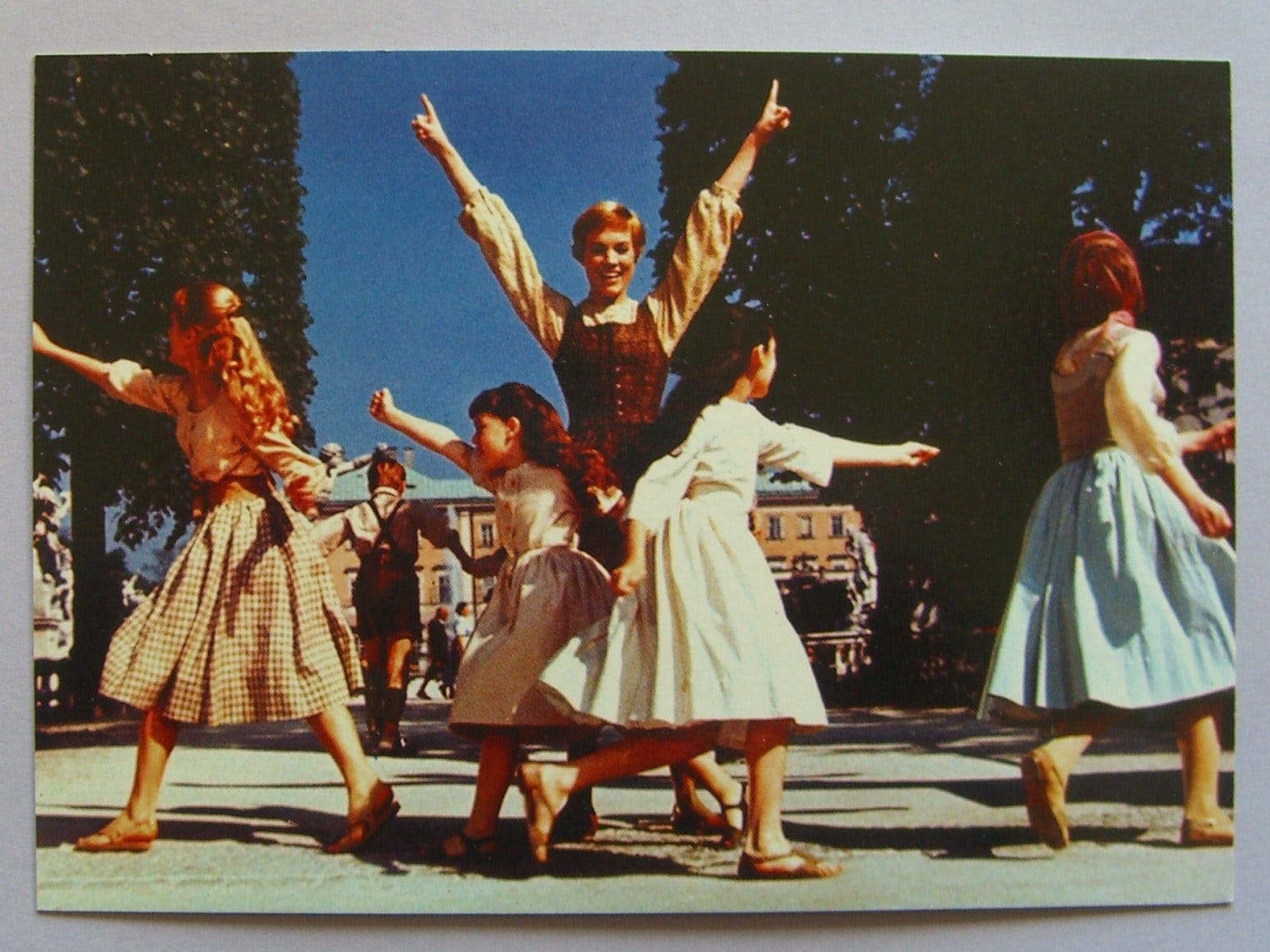
‘Do-Re-Mi’ and the Fourth Way: Octaves, Triads, and the Symphony of Awakening
Shifting to The Sound of Music, the “Do-Re-Mi” sequence—Maria teaching the von Trapps solfège amid Salzburg’s emerald hills—crystallizes Gurdjieff and Ouspensky’s Fourth Way as a musical allegory. The Fourth Way, expounded in Ouspensky’s In Search of the Miraculous (1949), synthesizes the monk’s (First), fakir’s (Second), and yogi’s (Third) paths into everyday “work”: self-remembering amid chaos, governed by two cosmic laws—the Law of Three (triads of affirming, denying, reconciling forces) and the Law of Seven (octaves of vibration, with deviations at mi-fa and si-do requiring “shocks”).
The solfège scale is the Law of Octaves incarnate. Gurdjieff, drawing from Pythagoras and Sarmoung Monastery lore, posited that all processes—cosmic creation, human evolution—unfold as incomplete octaves: vibrations accelerate unevenly, stalling at “intervals” unless shocked by conscious effort. The diatonic scale (do-re-mi-fa-sol-la-si-do) exemplifies this: seven notes plus the returning do form the octave, with half-steps at mi-fa (retardation, deviation) and si-do (final gap). Ouspensky illustrates: a seed’s growth halts without water (mi-fa shock); a student’s learning plateaus without insight (si-do). In triads, music’s building blocks (root-third-fifth), the Law of Three manifests: major triads affirm joy (e.g., do-mi-sol), minors deny melancholy (re-fa-la), resolving in seventh chords’ tension-release.
”Do-Re-Mi” dramatizes this pedagogy. Maria, the Initiatrix, transforms solfège from rote exercise into a game: “Doe, a deer, a female deer” (do as grounding prima materia, animal vitality); “Ray, a drop of golden sun” (re as affirming light, alchemical aurum potabile); “Me, a name I call myself” (mi as self-remembering, the first interval’s peril—ego’s shadow); “Fa(r), a long long way to run” (fa as the post-deviation push, endurance); “Sew, a needle pulling thread” (sol as reconciling craft, weaving centers); “La, a note to follow Sol” (la as harmonious flow); “Tea, a drink with jam and bread” (ti as penultimate tension, needing shock); “That will bring us back to Do(h)” (do’s return, completed octave). The sequence’s playful mnemonics encode triads: each note’s image forms affirming (life), denying (form), reconciling (essence) dynamics, culminating in the children’s choral triad with Maria—pure rubedo.
The von Trapps’ arc mirrors a Work Octave: the Captain’s mechanical rigor (descending octave, si-do denial) shocked by Maria’s vitality (ascending do-re); the Nazis’ encroachment as mi-fa deviation (historical retardation); the family’s escape via folk songs (intentional shocks, like Gurdjieff’s Movements). Rodgers and Hammerstein’s score, with its modal folk inflections, evokes Gurdjieff’s “objective art”—music vibrating inner octaves, as in his compositions with Thomas de Hartmann. Ouspensky notes music’s power: triads birth new harmonies, octaves ladder worlds. Here, “Do-Re-Mi” shocks the audience from passive viewing to active resonance, awakening the “pure heart” Gurdjieff demanded.
Interconnections: A Unified Field of Esoteric Musical Theater
These elements cohere in a grander tapestry. Travers’ Gurdjieffianism links Poppins to Sound of Music via shared motifs: both nannies as Fourth Way teachers, using song to bridge octaves; both films as alchemical opus: Poppins the nigredo-albedo (soot to flight), Sound the rubedo (family gold). Andrews, voicing the divine feminine, unites them—her range spanning the Ray of Creation’s densities. Even Disney’s syncretism (Masonic hidden hand) and Wise’s Catholic undertones (Maria’s postulancy) nod to Gurdjieff’s “esoteric Christianity.”
Critically, this reading resists literalism: Travers denied overt occultism, insisting Poppins was “Zen” parable; Hammerstein drew from Austrian lore, not Ouspensky. Yet, through Cosmic Mind, synchronicities abound—Gurdjieff’s enneagram as hidden geometry in both films’ ensembles; the “winds in the east” of Poppins echoing Salzburg’s foehn winds in Sound. For initiates, these are shocks: invitations to self-observation.
In sum, this thesis unveils musicals as Fourth Way vehicles, Andrews as sonic hierodule, “Chim Chim” as soot-veiled lapis philosophorum, and “Do-Re-Mi” as octave map. They remind us: awakening lurks in whimsy, demanding we sing through intervals to reclaim the Absolute. As Gurdjieff quipped, “Without music, life would be a mistake”—but with esoteric ears, it’s a miracle.
What hidden note shall we strike next?
HFL + Grok 2025
For entertainment purposes only.